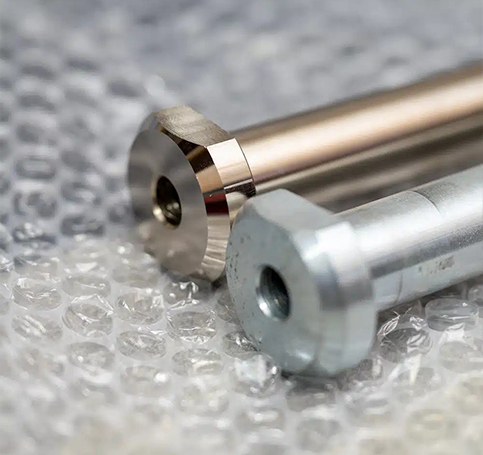

Electroless Nickel (ASTM: B 733) Plating
Advanced Electroless Nickel Plating for Precision Components
Is your manufacturing operation struggling with uneven coating distribution, insufficient wear resistance, or inconsistent corrosion protection? Many industrial components fail prematurely from inadequate plating in important recessed areas and complex geometries.
At Nobert Plating, we provide specialized electroless nickel plating services utilizing state-of-the-art technologies to deliver outstanding coating uniformity and performance. From intricate parts with deep recesses to large components requiring precise thickness control, our electroless nickel solutions provide outstanding protection and functionality.

The Technical Advantages of Electroless Nickel
Standard electrolytic plating methods often struggle with uniform coverage on complex geometries. Your precision components require a plating process that delivers consistent protection on all surfaces, including recesses and blind holes.
Our electroless nickel plating services address several important manufacturing challenges:
- Uniform deposit thickness on complex geometries
- Excellent coverage in recessed areas and cavities
- Excellent corrosion resistance for harsh environments
- Exceptional wear resistance with proper thickness
- Hardness customization through heat treatment
- Minimal build-up on edges and corners
- Less porous deposits than conventional electroplating
With extensive electroless nickel expertise, our technical team balances performance requirements with cost-effectiveness to deliver plated components that excel in your most demanding applications.
Electroless Nickel Process Capabilities

Uniform Coverage
The chemical reduction process creates consistent deposit thickness regardless of part geometry, eliminating the "dog-bone" effect common with electrolytic methods.

Precision Thickness Control
Our advanced monitoring delivers tight tolerance control within ±0.0001" of target specifications.

Phosphorus Content Options
Available in high (10-12%), medium (6-9%), and low (1-5%) phosphorus formulations to match your specific performance requirements.

Non-Magnetic Options
High-phosphorus electroless nickel deposits are non-magnetic, offering solutions for sensitive electronic applications.

Post-Plating Heat Treatment
Optional heat treatment processes can increase hardness up to Rc 65 for maximum wear resistance.

Corrosion Resistance
Provides excellent protection against many corrosive environments, comparable to stainless steel when properly specified.
Contact Us
Ready to improve your product performance with precision electroless nickel plating? We can provide high-quality deposits that meet your exact specifications, boost product durability, and deliver consistent results.
Industrial Applications for Electroless Nickel
Our electroless nickel plating services provide solutions across numerous industries:

Oil and Gas Equipment
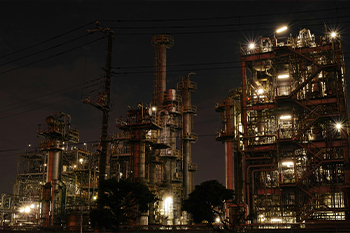
Corrosion and wear protection for valves, pumps, flow meters, and downhole tools operating in harsh environments.

Aerospace Components
Precision coatings meeting rigorous industry standards for aircraft hydraulic systems, actuators, and structural components.
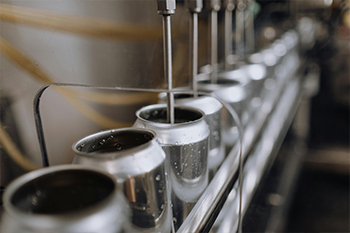
Food Processing Machinery
FDA-compliant coatings for equipment requiring corrosion resistance and sanitary properties

Automotive Parts
Wear resistance and dimensional stability for fuel system components, pistons, and engine parts.
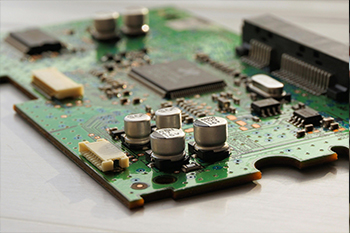
Electronics Manufacturing
Non-magnetic shielding and protection for sensitive components and circuit board applications.
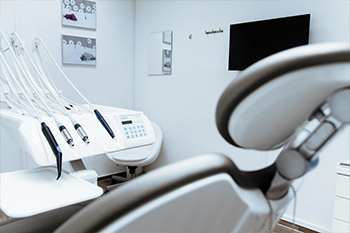
Medical Devices
Biocompatible coatings for surgical instruments and diagnostic equipment requiring sterilization resistance.
For applications requiring maximum electrical conductivity in addition to corrosion resistance, consider our silver plating services, which provide outstanding conductivity for electrical and electronic components.
Why Choose Nobert Plating for Electroless Nickel
With decades of electroless nickel expertise, we understand the important performance requirements for precision-plated components. Our team delivers solutions that meet exact specifications and maintains consistent quality batch after batch.
What distinguishes us from standard plating providers:
- Process expertise with all phosphorus content formulations
- Bath analysis and maintenance for consistent deposit properties
- Comprehensive quality testing and documentation
- Technical consultation to optimize specifications
- Responsive customer service and reliable delivery
- Problem-solving capability for challenging applications
- Competitive pricing without compromising quality

Frequently Asked Questions About Electroless Nickel
Most metals including steel, stainless steel, copper alloys, and aluminum can be electroless nickel plated. Some non-metallic substrates can be plated with proper preparation.
Standard applications range from 0.0002" to 0.001", with capability up to 0.003" for special requirements. Optimal thickness depends on the specific application needs.
Higher phosphorus content (10-12%) provides maximum corrosion resistance and non-magnetic properties. Medium phosphorus (6-9%) balances corrosion resistance with hardness. Low phosphorus (1-5%) offers maximum as-plated hardness.
Yes, heat treatment can increase hardness from the as-plated 48-52 Rc up to 65+ Rc depending on phosphorus content and treatment temperature.
Our processes conform to AMS 2404, ASTM B733, and MIL-C-26074, among others, depending on your specific requirements.
Yes, we offer FDA-compliant electroless nickel for food processing equipment and similar applications. Please specify this requirement when requesting a quote.
Electroless nickel offers more uniform coverage on complex parts with comparable wear resistance when heat treated, often making it an excellent alternative to hard chrome.
he coating builds up uniformly on all surfaces, adding twice the thickness to each dimension. We can control this precisely to maintain exact tolerances.
Yes, conductivity varies with phosphorus content. Low-phosphorus deposits provide better conductivity than high-phosphorus formulations.
The finish is similar to stainless steel in appearance, with a slightly warmer tone depending on phosphorus content.
